

Beyond Annuities: How Housing Wealth is Transforming Retirement Income Planning in 2026 |
Discover how $14.7 trillion in senior housing wealth is transforming retirement income planning beyond traditional annuities. Strategic home equity solutions for 2025. |
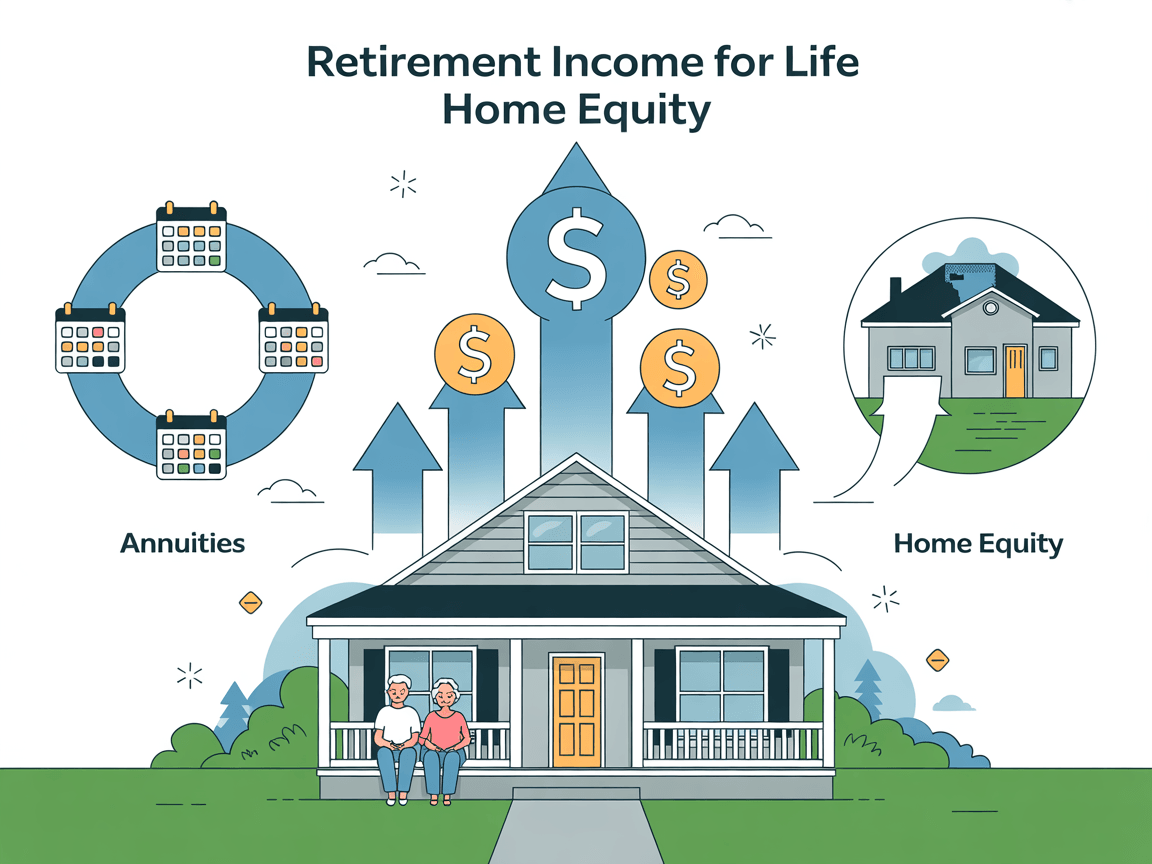
One-third of Americans approaching retirement now consider delaying their golden years altogether, facing persistent inflation, market volatility, and growing fears about Social Security's future.
Nearly half of retirees report anxiety about spending money in retirement, while 54% of pre-retirees worry about outliving their savings.
These numbers reveal a stark truth: traditional retirement income strategies are falling short for millions of Americans heading into 2026.
While financial advisors rush to recommend annuities and portfolio withdrawals, a massive opportunity sits quietly accumulating value — the record $14.66 trillion in housing wealth held by homeowners ages 62 and older.
The retirement income conversation is evolving rapidly.
The retirement landscape in 2026 is significantly influenced by inflation and fluctuating interest rates, affecting the purchasing power of savings and investment stability.
Recent research shows that outside the top 30% of income earners, many baby boomers are likely to fall short of retirement savings goals, with a typical earner facing an annual spending shortfall of $9,000.
But here's what most retirement conversations miss: housing wealth represents the single largest untapped resource in American retirement planning.
At a time when inflation pressures and the fear of outliving retirement savings remain top concerns for retirees, home equity stands out as a powerful yet often underutilized financial resource that can help offset rising costs and reduce income shortfalls.
The Real Numbers Behind Housing Wealth
This improvement in retirement readiness is especially significant for lower-income baby boomers, whose wealth is often concentrated in their homes rather than retirement savings accounts, with those earning $22,000 annually having 3.8 times their income locked away in home equity.
Among people who retire and relocate, about 60% move to somewhere less expensive, typically unlocking about $100,000 of equity from a home they may have purchased decades earlier.
That's not pocket change — it's retirement security.
If retirees were to extract the full value of their home equity by selling and renting in retirement, research estimates that retirement readiness among baby boomers would increase by 20 percentage points, with 60% on track to maintain their lifestyle.
Why Housing Wealth Solves What Annuities Can't
While the insurance industry pushes annuities as the most recommended investment for retirement security, these rigid products can't match the flexibility that strategic home equity planning provides.
Unlike annuities with fixed payout structures, home equity solutions allow retirees to access funds strategically, on demand, and in coordination with other income sources.
Home Equity Conversion Mortgages can provide flexibility to retirement income strategies, especially when you want to avoid tapping your portfolio during a down market or require emergency cash beyond what you have on hand.
It's not an all-or-nothing decision — it's adaptive income planning.
Financial advisers increasingly view home equity as part of a client's overall strategy rather than a fallback plan, modeling scenarios to help families see the potential impact on income, liquidity, net worth and legacy.
The Strategy Shift Financial Professionals Need to Make
In 2026, financial experts generally recommend having a retirement fund that can replace 70-90% of pre-retirement income, but individual needs and goals vary significantly.
Here's where housing wealth changes the game entirely.
Home equity can be a significant source of wealth for retirees, often representing a large portion of their net worth that can be used to supplement retirement income, fund long-term care, or pass wealth to heirs.
Many homeowners hold 40%, 60% or more of their net worth in their primary residence, creating concentration risk when a single asset dominates your financial picture, particularly for retirees who often face strong home equity but limited liquid funds.
This isn't about encouraging reckless borrowing — it's about strategic wealth optimization.
In many retirement plans, home equity just sits there quietly accumulating value while retirees worry about market swings and rising costs, but it doesn't have to be passive as equity can help absorb shocks, smooth income, or extend portfolio longevity.
Multiple Pathways to Housing Wealth Access
Smart retirement planning in 2026 recognizes that housing wealth strategies come in multiple forms:
Downsizing can be one of the best ways to reduce expenses, allowing you to eliminate or reduce your mortgage and reduce living expenses while retaining accumulated home equity for future emergencies.
You might consider renting out all or part of your house to generate income in retirement, or tap your home equity to make necessary repairs before you no longer have the cash to do so.
The key is having options when life demands flexibility.
Housing wealth need not be considered off-limits in terms of retirement planning, and the fact that so many people are already using it might nudge prospective retirees to consider all sources of wealth for retirement funding.
The Bottom Line for 2026 and Beyond
Recent research based on insights from over 50 industry leaders identified five critical trends shaping the future of retirement planning.
The most important insight isn't about any specific product category — it's about what retirees actually value: income that lasts, protection from volatility, and flexibility in the face of rising costs.
Employees are strongly interested in solutions that provide easy-to-understand, reliable and predictable income streams, driving the retirement services industry to enhance retirement income planning tools and personalize retirement projections.
Housing is usually your most costly expense and also your biggest asset, and may be even more important than your savings as one of the most important components of your overall retirement plan.
For mortgage professionals and financial advisors, this represents a fundamental positioning shift.
Retirement mortgage solutions aren't niche products or last-resort options — they're strategic income and risk-management tools that belong in the same conversation as annuities, pensions, and portfolio withdrawals.
If you're planning for retirement, make sure your home equity is part of the discussion, and if you need help, talk to a financial advisor who can help you use your assets strategically to meet your retirement goals. |
0 Comments
Join the conversation
Be the first to comment
Share your thoughts above.