

Seven Stubborn Myths About Growing Older That Science Has Already Debunked |
Discover the truth behind common wrong ideas about growing old. Recent research debunks myths about aging, brain power, exercise, sleep, and independence. |
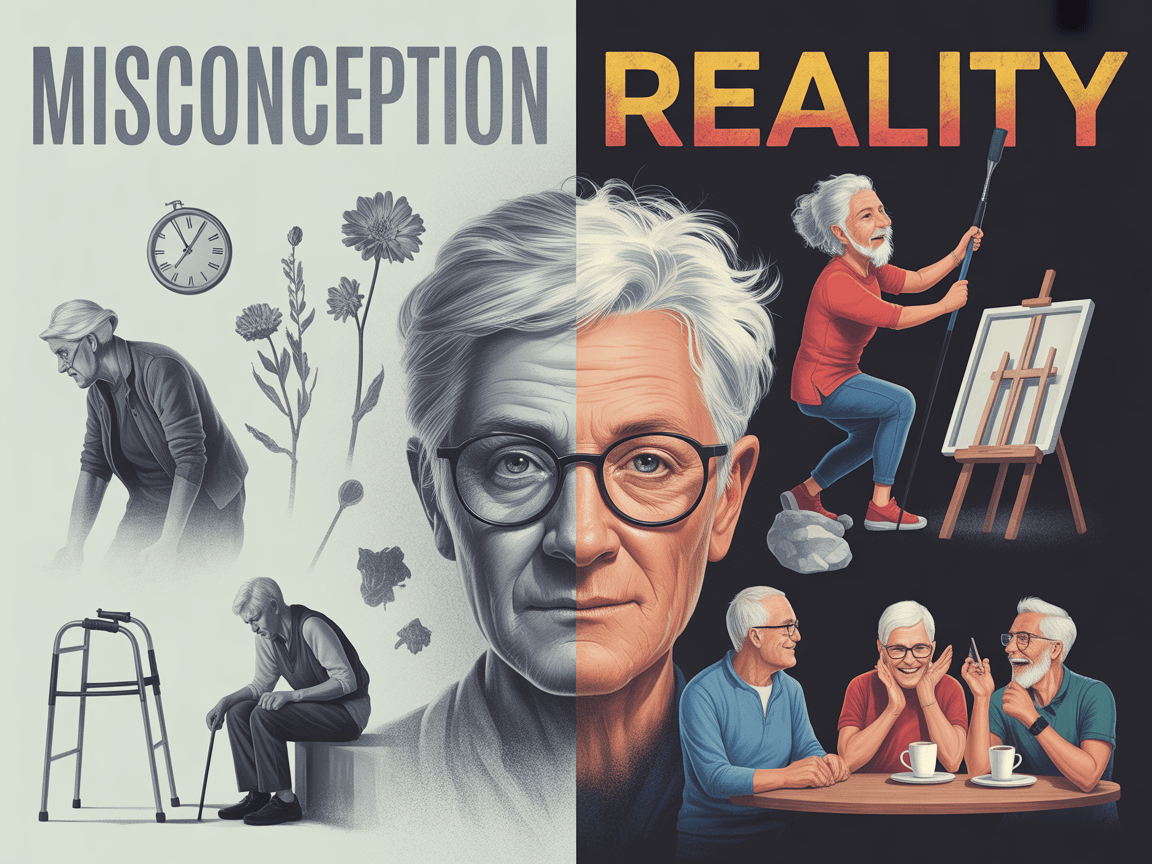
Growing older doesn't have to mean what you think it means.
For decades, Americans have clung to outdated ideas about what happens when we age, creating a collection of myths that range from mildly annoying to genuinely harmful.
Today's seniors are more educated, tech-savvy, and connected than ever before.
More than half the people who ever lived to be 65 are alive today. That alone suggests that myths about aging based on past generations may not hold true for this one.
The stakes for getting this right have never been higher.
By 2060, nearly 98 million Americans will be 65 or older, fundamentally reshaping everything from healthcare to housing markets.
Yet many of us still operate under misconceptions that paint aging as an inevitable slide into decline.
Let's examine seven persistent myths about growing older that recent research has thoroughly dismantled.
Myth 1: Your Brain Stops Learning New Things
Perhaps no aging myth is more damaging than the belief that cognitive development flatlines after a certain age.
Studies have established that not only can seniors learn new things, but that it's beneficial to make learning a lifelong pursuit.
Older adults still have the ability to learn something new, create new memories, and improve their performance in a variety of skills. While aging does often come with changes in thinking, many cognitive changes are positive, such as having more knowledge and insight from a lifetime of experiences.
The brain's plasticity doesn't disappear with age—it simply adapts.
According to a 2014 NIH study, pursuing new interests that stimulate the brain help improve memory.
Learning new skills may even improve cognitive abilities, creating what researchers call a "cognitive reserve."
Myth 2: Depression Is Just Part of Getting Older
The assumption that aging automatically brings sadness and despair couldn't be further from reality.
Studies show that older adults are actually less likely to be depressed than younger adults.
Many studies find that seniors are among the happiest age group. Happiness levels by age follow a U-shaped curve, with self reported levels of happiness at their lowest at age 40, but then growing thereafter.
This makes sense when you consider the advantages that come with experience.
They also are likely to benefit from having long-lasting personal relationships, as well as happy memories from throughout life to bring them joy.
The data suggests that reaching your later years might actually be when happiness peaks, not when it vanishes.
Myth 3: Exercise Becomes Too Dangerous
The fear that physical activity might harm older adults has led many to adopt sedentary lifestyles, ironically creating the very frailty they hoped to avoid.
Exercise and physical activity can be good for a person's health at any age! Studies show that most people have a lot more to gain by being active — and a lot to lose by sitting too much.
Research has consistently shown that regular exercise can actually reverse many effects of aging.
The scientists found that the older adults who had undertaken heavy resistance training for 1 year were better able to maintain muscle strength than peers in the other groups, even 4 years after the initial study period.
The evidence suggests that avoiding exercise is far riskier than engaging in appropriate physical activity.
Often, being sedentary or inactive is more to blame than age when older adults lose the ability to do things on their own.
Myth 4: Sleep Needs Decrease With Age
One of the most widespread misconceptions about aging involves sleep requirements.
Older adults need the same amount of sleep as other adults: seven to nine hours each night.
It's true that older adults need less sleep than younger adults — but only 30 to 60 minutes less. You should still get six to seven hours of sleep a night.
The confusion arises because sleep quality often changes with age, not sleep requirements.
People with chronic inadequate sleep are at higher risk for dementia, depression, heart disease, obesity, diabetes, fall-related injuries, and cancer.
Getting less sleep and needing less sleep are two entirely different things.
Myth 5: Sexual Interest Disappears
Perhaps no topic generates more discomfort than discussing sexuality among older adults, leading to harmful stereotypes about desire and capability.
There's a stereotype that sexual activity and desire diminish with age, but this is not necessarily true. Many older adults continue to have active and fulfilling sex lives.
The research reveals that sexual health remains important throughout life.
One survey found that two-thirds of respondents 65 and over were still interested in intimacy, with many remaining sexually active well into their 80s.
The myth of sexless aging reflects cultural discomfort more than biological reality.
Myth 6: Technology Is Too Complicated
The stereotype of tech-confused seniors has become increasingly outdated as older adults embrace digital tools.
In reality, many seniors are quite adept with modern technology, from smartphones to social media. Technology can offer numerous benefits, including keeping in touch with loved ones and accessing valuable information, and many older individuals embrace these tools with enthusiasm and skill.
The assumption that age equals technological incompetence ignores the adaptability that comes with decades of experience navigating change.
Many seniors have successfully adapted to more technological revolutions than younger generations have even witnessed.
Myth 7: Independence Inevitably Disappears
The fear of losing independence drives many aging-related anxieties, but the data tells a different story.
Many older adults remain independent for a long time and can manage their daily activities without assistance. With the right support and adaptations, independence can be maintained well into old age.
Recent census data shows that less than 10 percent of 85-year-olds live in care facilities.
The vast majority of older Americans continue living in their own homes or with family members, maintaining significant control over their daily lives.
Independence doesn't have an expiration date—it simply requires thoughtful planning and appropriate support.
The Cost of Believing These Myths
Stereotypes and myths about aging paint a negative, narrow view of what it means to grow older, and that can have real consequences.
Some research suggests that merely expecting physical deterioration increases the likelihood that someone will physically deteriorate. Expectations regarding aging play an important role in the adoption of physically active lifestyles in older adults and may influence health outcomes, such as physical function.
When we expect decline, we often create the conditions for it to occur.
Our beliefs about aging can become self-fulfilling prophecies.
The reality is that 70% of how we age comes down to lifestyle choices. Eating right, getting plenty of sleep, not smoking, limiting alcohol consumption, and getting regular exercise all play a bigger role in your overall health and longevity than genetics.
Studies show that aging well is possible when aided by a positive attitude, a sense of independence, a purpose in life, and continued social engagement.
As our population ages, debunking these myths becomes more than an academic exercise—it's essential for creating a society where growing older is seen as an opportunity rather than a burden.
They continue to make valuable contributions to their families, communities, and even the workforce. They bring experience, wisdom, and perspective.
The next time someone shares outdated ideas about aging, remember that the science tells a much more encouraging story.
Growing older doesn't mean growing less capable, less happy, or less valuable—it means gaining experience, wisdom, and often a clearer perspective on what truly matters in life. |
0 Comments
Join the conversation
Be the first to comment
Share your thoughts above.